" height="18px" id="mDJPTPAnZ" transform="translate(4 7)" width="24px"/></svg>)
" height="20.00111219075793px" id="Q8AnWij7S" transform="translate(5.999 5.999)" width="20.00111219075793px"/></svg>)
6 pros and cons of letting candidates use AI during your coding interview
Is rebranding “AI cheating” as “AI enablement” the first step to a better tech hiring? The verdict’s still out (and the question itself is pretty polarizing).

CEO & Founder
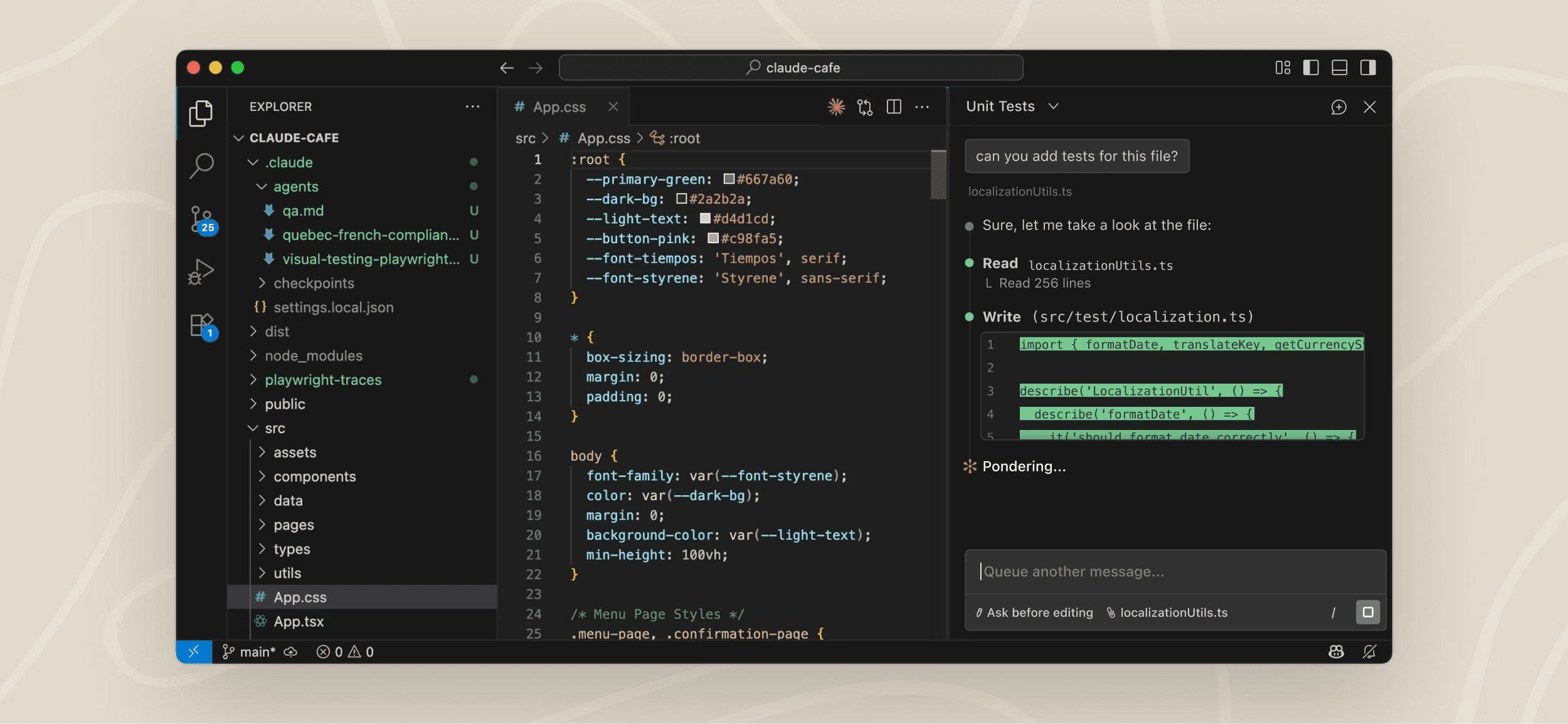
Is rebranding “AI cheating” as “AI enablement” the first step to a better tech hiring? The verdict’s still out (and the question itself is pretty polarizing).
Consider several factors:
Recruiters wade through 3.5x more applications than they did a few years ago.
One-third of candidates admit to claiming AI experience they don’t actually have.
SlackOverflow data from 2025 shows that 84% of software engineers use AI coding assistants in their daily work, and over half are more productive as a result.
Coderbyte’s 2026 State of Hiring Report reveals that 81% of organizations deal with candidates cheating in an unethical way with AI during the evaluation process. About half say they’ve actively caught candidates in the act once or multiple times, while the remainder suspect that cheating has happened, but have no way to confirm.
So, how do we unlock the power of enabling good engineers to be great with AI, without wasting time, energy, and budget on the faux pros?
The pros and cons to consider
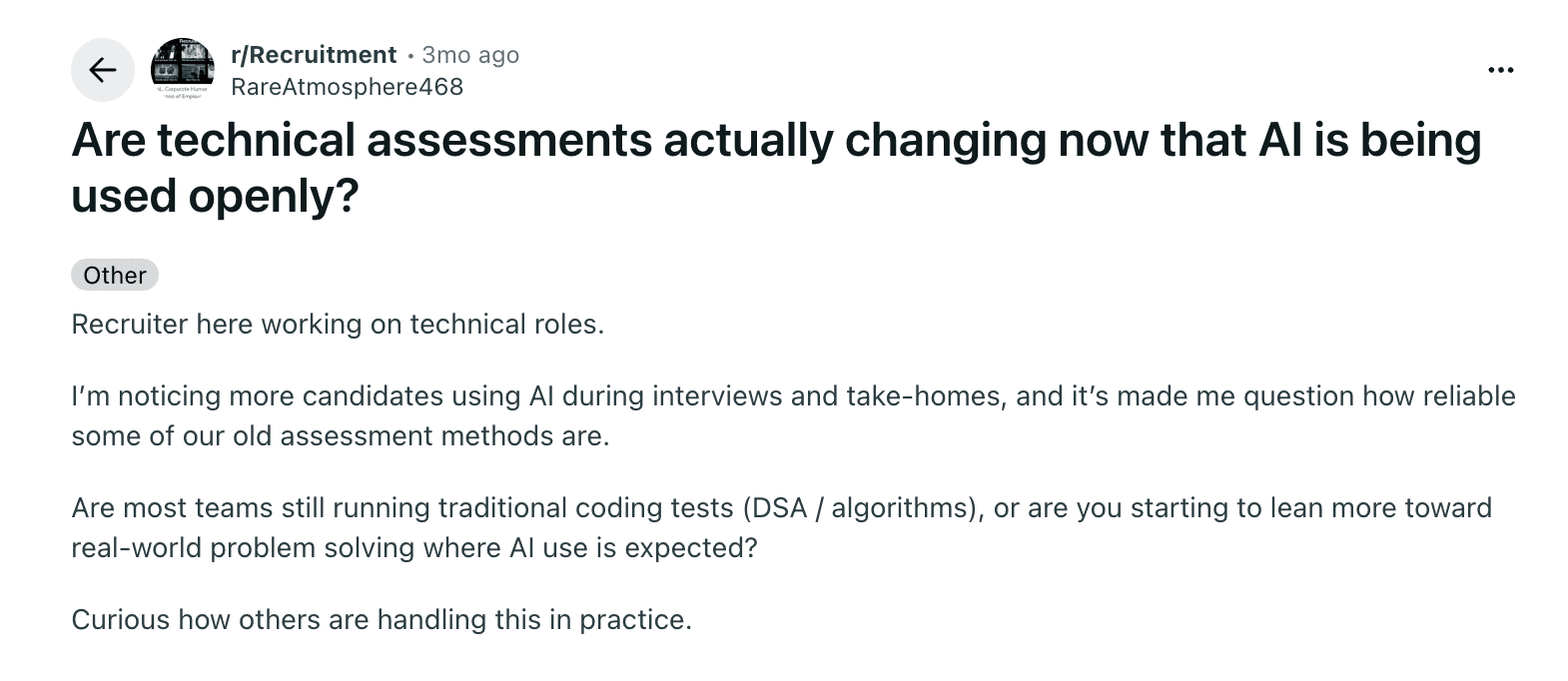
Meta started piloting AI-enabled coding interviews last year.
Amazon remains confident in their stance to ban AI usage outright.
The team at Anthropic has rewritten their take-home three times in the last year because candidates kept solving it with Claude.
1. Pro: You confirm AI fluency (and as a bonus, see the strategic parts of engineering work shine)
As one Reddit user put it, “an expert with AI is a massive asset. A confident idiot with AI is a massive liability.” That’s especially true for software engineering.
In the era of AI coding assistants, you need to be able to differentiate between the two, interviews that only evaluate a candidate’s ability to generate code are a risk you can’t afford to take.
LinkedIn found job postings requiring AI literacy skills grew by more than 70% year over year (and employers will pay a premium for them). Today, AI is both the requirement and the looming threat.
That’s why how candidates use AI is what actually matters. And once you let AI take over the code writing, the way an engineer handles the rest of the job, comes to light: how they prompt, how they catch bad output, and their strategic thinking skills. That’s the key to clearer, stronger signal in 2026.
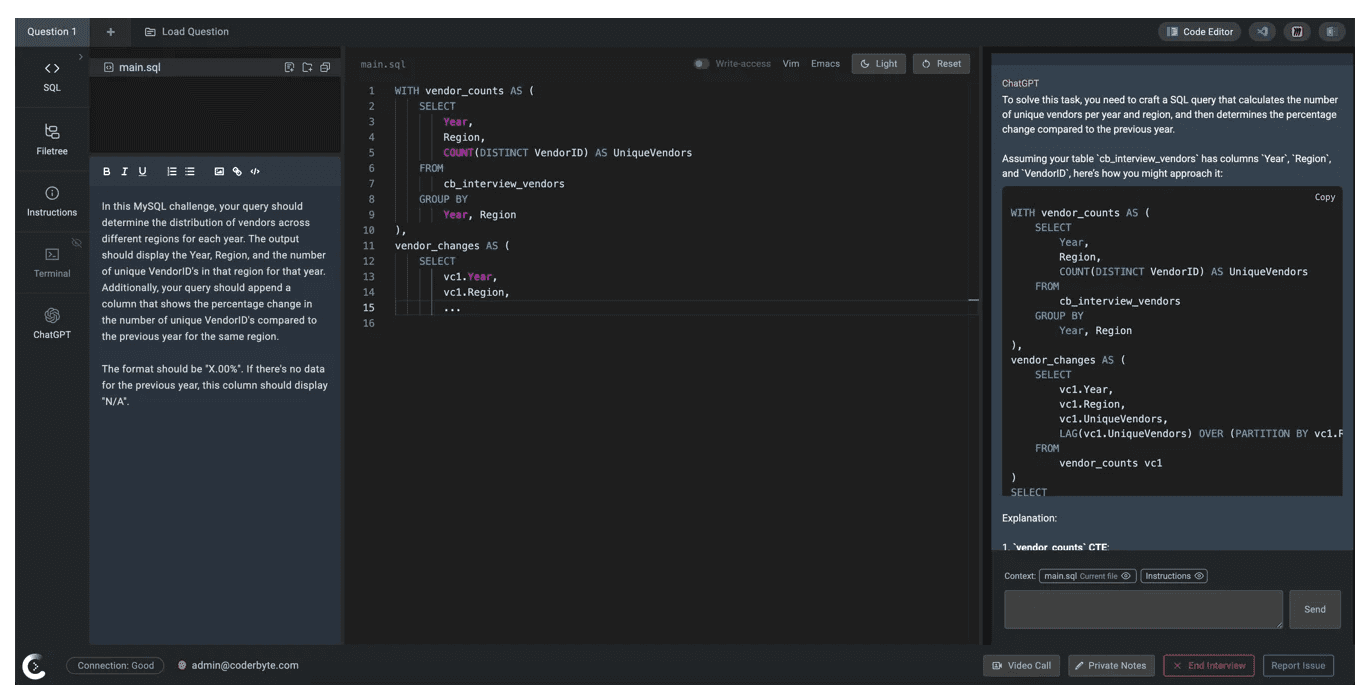
(Did you know? Coderbyte lets candidates work alongside ChatGPT inside the IDE during interviews and take-home projects, and offers prompt engineering challenges in our library).
2. Pro: It’s realistic and true to the job at hand
You’re hiring engineers to do important work, so why shouldn’t their interview be a reflection of what’s expected on the job?
It could be argued that getting help from AI means hiring teams can’t accurately assess engineers’ baseline skills. But if a big part of the job is to solve problems effectively using modern tools, wouldn’t banning those tools during the interview be like banning Google in 2015? Most candidates say yes.
Want to hire engineers that can do the work, and have a hiring process that doesn’t suck for them along the way? Mirroring the job responsibilities during the interview process, while giving them the freedom to show off the best of what they can do in the IDE, is the way.
With tools like Coderbyte, you can build a single assessment that mixes AI-disallowed challenges with AI-embedded projects, mirroring how the work actually splits on the job.
3. Pro: It’s a decisive pivot in the direction tech hiring is already moving
AI hasn’t replaced engineers, despite all the fearmongering that continues to saturate tech media outlets. And it’s because, as it turns out, AI makes good engineers better, faster, and more efficient. Finding and hiring them comes with a tradeoff: having to weed out the unqualified candidates hoping to get away with pretending to be one.
With AI poised to change roles and responsibilities across software engineering, trying to forcibly eliminate it from hiring processes for candidates (while they watch you fumbling to embrace it internally) only puts you on the road to hypocrisy, and a long line of frustrated candidates.
Anthropic says:
“Evaluating technical candidates becomes harder as AI capabilities improve. A [process] that distinguishes well between human skill levels today may be trivially solved by models tomorrow: rendering it useless for evaluation.”
Moving ahead of the curve, not with it, will be key to a hiring process that works: not one you’re redesigning once a quarter.
1. Con: You may not be able to unblur the lines between LLM and candidate (without proctoring or something similar)
The interview is meant to measure the candidate. The moment you let AI in, you're scoring the candidate plus the model, and the seam in between isn't always clean.
"Don't cheat. Copilot." is easy to say to candidates. It's a lot harder to verify in real time. Without proctoring or a rubric built specifically around AI use, you risk hiring someone whose strongest skill is prompting their way past your filter.
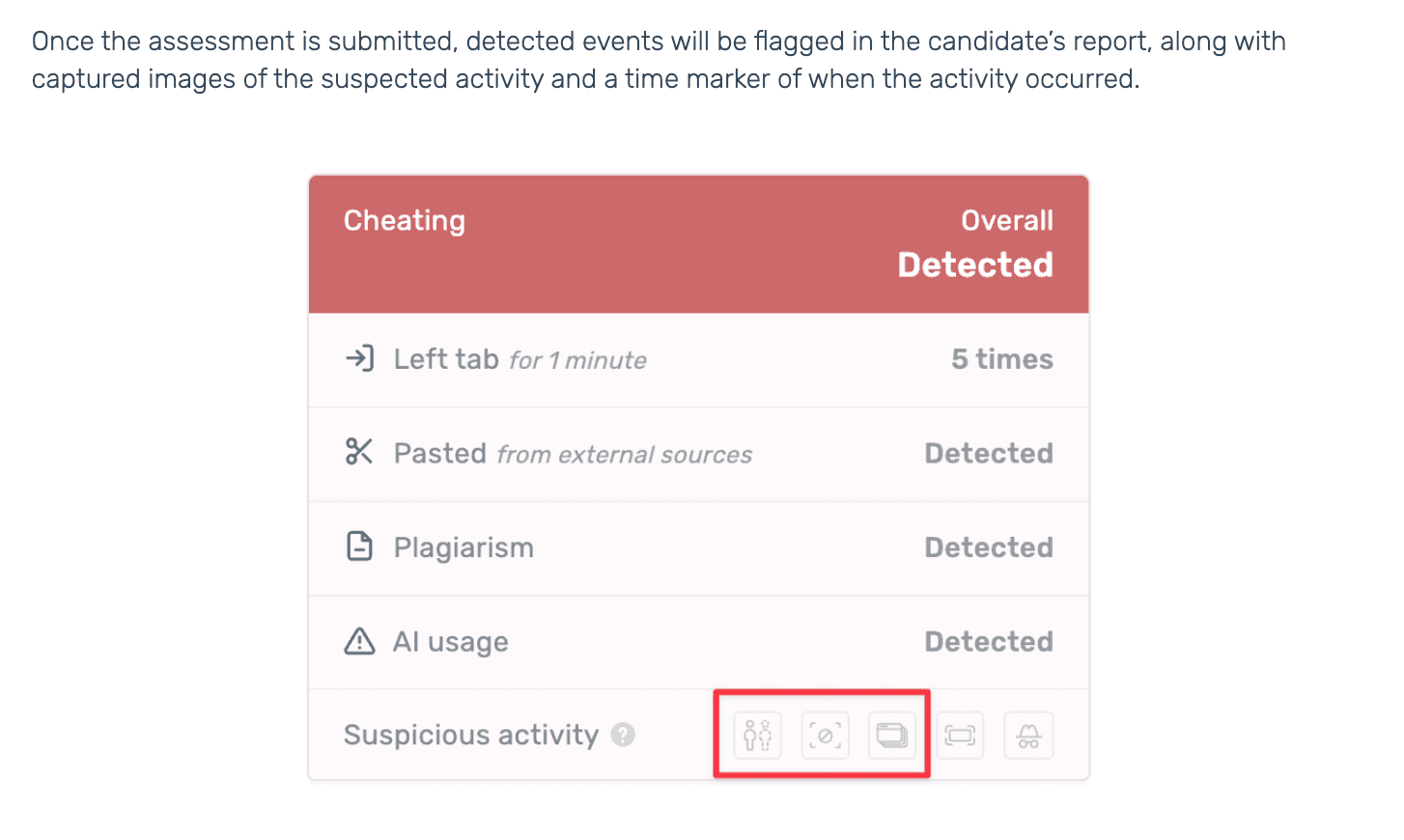
(This is where Coderbyte’s webcam proctoring and AI content checks on submitted code earn their keep. You may not be able to unblur the lines, but you can more accurately assess what the candidate brought to the table before their “invisible” helper tapped in.)
2. Con: AI doesn't show you the soft skills, but you still need to assess them
Hiring managers consistently identify soft skills as critical deficiencies among candidates, says the WEF.
Code that compiles isn't the same as code from someone you'd want on the team. Collaboration, communication, pushing back on a colleague’s suggestion: none of those skills surface in a coding screen, AI-enabled or not. Even Meta pairs AI-allowed coding with behavioral and system design rounds for a reason. It’s because the coding part is one piece of the puzzle, not the whole hire.
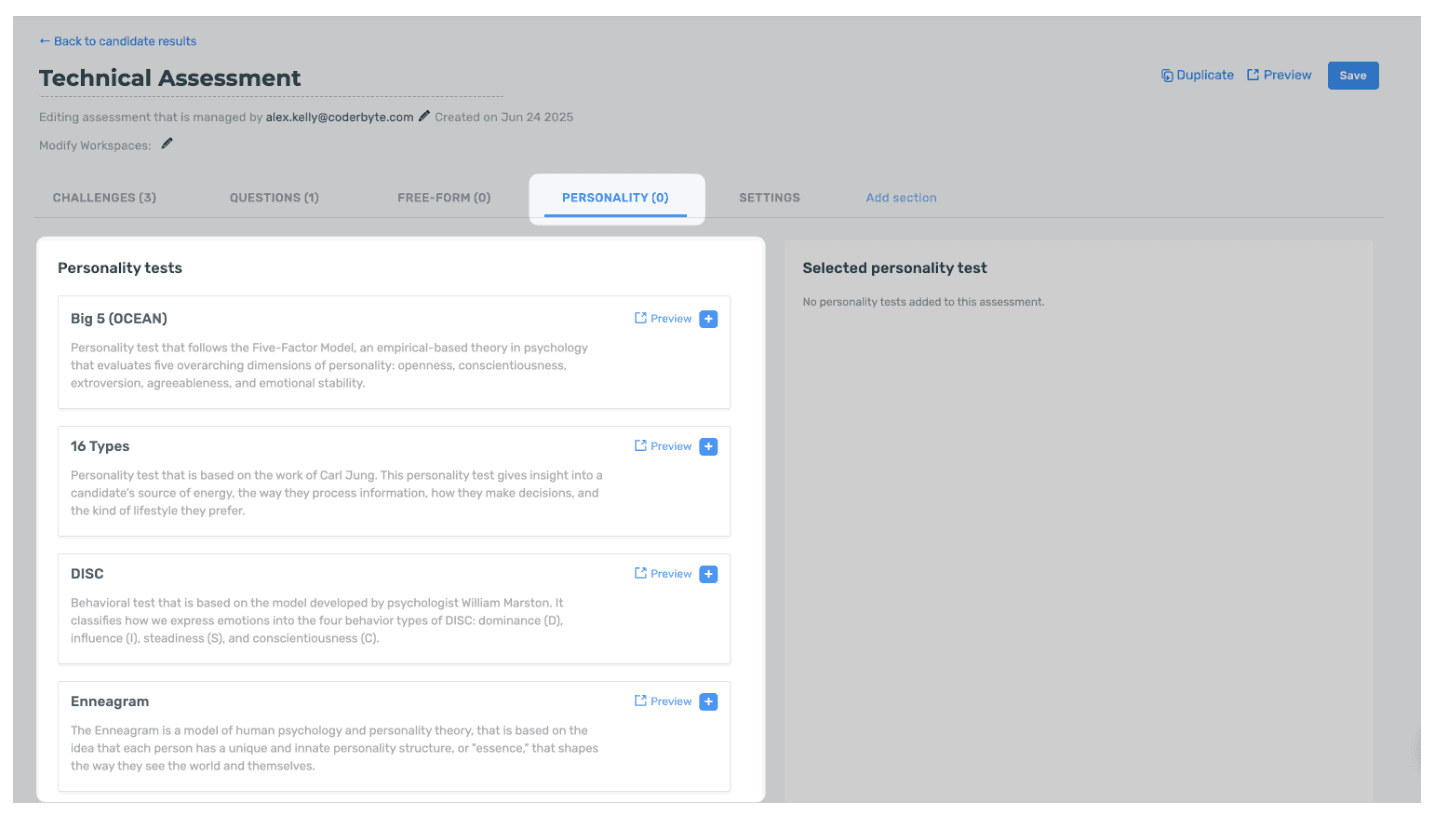
With Coderbyte, you can build teams that work better and smarter together, not just teams that write solid, usable code. With a mix of personality tests and skills-based assessments, Coderbyte makes it easy to qualify personality, motivation, and fit, as well as a candidate’s ability to thrive on the job.
3. Con: Embracing AI in hiring isn’t just plug-and-play, but it is worth it.
Letting candidates use AI in interviews isn't a setting you just flip on.
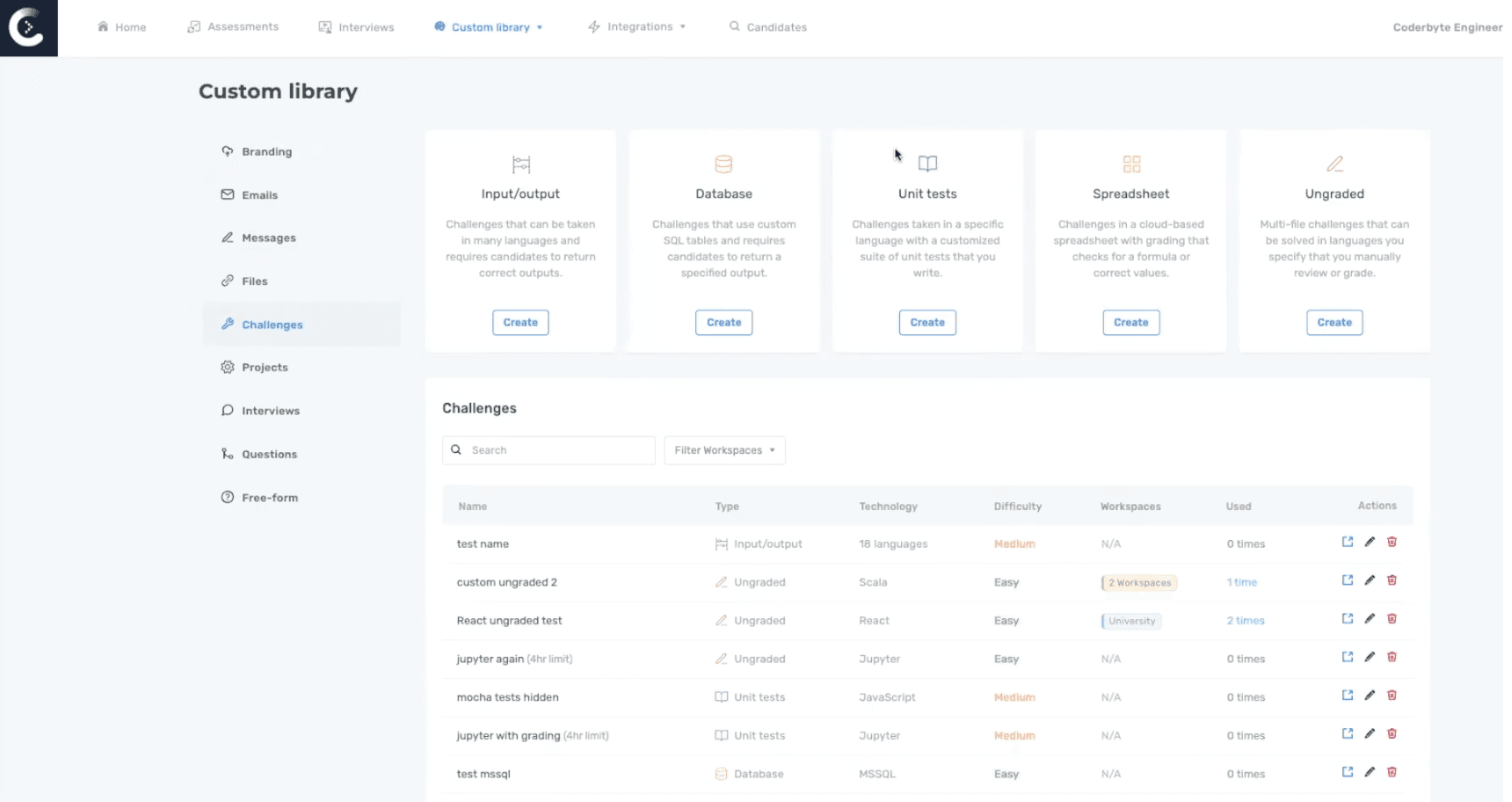
It changes what you're measuring entirely. That means new rubrics, dedicated training for your interviewers, and a question bank that can't just sit on a shelf untouched and unoptimized. Anthropic rewrote their take-home three times in a year because each version got solved by newer models, and yours will need similar upkeep.
The teams that do this work end up with interview processes that actually predict job performance. Bonus: you also get a process that doesn't fall apart every time a new model ships.
AI will continue to evolve, and there’s no stopping that. But it also has its limits — and so does the window of time hiring teams have to adapt.
The folks that learn to interview with AI in the room are going to out-hire the ones still pretending it isn't there, even if banning it may feel like it’s the only foolproof approach right now.
" height="18px" id="bfgxjBcLr" transform="translate(1 1)" width="18px"/></svg>)
" height="18px" id="NKz1zJmxh" transform="translate(1 1)" width="18.000000922527658px"/></svg>)
" height="15.998999999999999px" id="lQ6Zl3KpL" transform="translate(0 2)" width="19.999px"/></svg>)
" height="17.875px" id="OnwM9Gbe_" transform="translate(0 1)" width="19.775px"/></svg>)